Mohyal Online

About Mohyal Mitter
Mohyal Mitter - Mohyal Mitter E-Magazine
AddThis Social Bookmark Button
THE MOHYAL MITTER

ONE OF INDIA'S OLDEST JOURNALS
Established in 1891


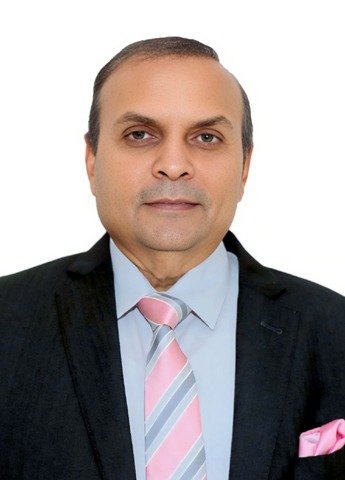
Editor
Mehta O.P. Mohan

Hindi Editor
Ashok Lau

This e-mail address is being protected from spambots. You need JavaScript enabled to view it ======================

Ownership : General Mohyal Sabha New Delhi-110067

Place of Publication : New Delhi

Languges : English & Hindi

Periodicity : Monthly

Retail Selling Price of single copy: Rs 5.00

Annual Subscription : Rs.50.00 

======================

All cheques/drafts should be sent in favour of GENERAL MOHYAL SABHA (REGD.) DELHI.
Mohyal Foundation,

A-9, Outab Institutional Area,
U.S.O. Road,Jeet Singh Marg,
New Delhi-110067
Telephone: 26560456, 26561504,32585750


Email:
This e-mail address is being protected from spambots. You need JavaScript enabled to view it This e-mail address is being protected from spambots. You need JavaScript enabled to view it          This e-mail address is being protected from spambots. You need JavaScript enabled to view it

Visit Our Website:

http://www.mohyal.com
http://www.mohyalonline.com

======================

MOHYAL BHAWAN
EG-29,30-30A,INDERPURI,
NEW DELHI-110012
PHONE:25835123
======================

Mohyal Ashram
Mohyal Ashram Marg, Haridwar-Rishikesh Road, Bhoopatwala (Opp. Shanti Kunj), Haridwar
Ph.: 01334-261336,261337
TELEFAX:01334-262472
TATA INDICOM:
09219441137
09219443813
E-mail:
This e-mail address is being protected from spambots. You need JavaScript enabled to view it

======================
Printer & Published by D.V.Mohan for and on behalf of General Moyal Sabha(Regd.) Moyal Foundation, A-9, Qutab Institutional Area, Jeet Singh Marg, New Delhi-67.
Printed at Dutta Press
B-9/3, Okhla Industrial Area Phase-II, New Delhi-110 020
Phones: 011-41911111-9
E-mails:
This e-mail address is being protected from spambots. You need JavaScript enabled to view it

This e-mail address is being protected from spambots. You need JavaScript enabled to view it


This e-mail address is being protected from spambots. You need JavaScript enabled to view it


The legend of being 'India's oldest journal' is printed on the cover of every issue of the Mohyal Mitter. This itself invests it with an aroma of antiquity. It may be recalled, However, that the honour of being the maiden newspaper of the Mohyal community actually belongs to 'Miratul Mohyali', started in the mid eighties of the last century, amid stiff opposition, by the peerless Mohyal Bakhshi Ram Dass Chhibber of Bhera.

The first issue of Mohyal Milter of 16 pages was published in September. 1891 and it carried an annual subscription of Rs. 2/50 which was a lordly sum in those days. In 1895, Bk. Tara Chand Chhibber put up a press in Lahore called the Mohyal Mitter Printing Press and it was decided to get the organ printed from that press. But due to some catastrophic reasons, the organ soon went out of publication. It made its second debut in 1901, largely due to the efforts of Bhai Parma Nand, Bk. Gokul Chand Chhibber and Ch. Ram Bhaj Datta. The first editor was Master Barkat Ram Vaid, Second Master Mission High School Wazirabad. While the paper was printed in Gujranwala, it was issued from Wazirabad and the subscription was received by Ch. Ganesh .Dass Datt at Lahore. Interestingly, in Vol. I Issue No.8, a list of 18 Mohyal boys who had successfully passed the Middle Exam of the Punjab University, was published; the most commendable performance being that of Jog Raj Bali of Miani who topped the list in whole of Punjab in the said exam.

In course of time. the Mohyal Mitter was enshrined in the heart of every Mohyal in the same way as the GMS itself was enshrined. Every Mohyal considered it as his moral obligation to subscribe to Mohyal Mitter. While most of the readers just skipped through the news columns, some read it from cover to cover 10 imbibe every word. There were also a few readers who used their focal lenses to scan the 'goshwaras' of accounts. which for many years constituted more than 20 per cent of the printed contents, to find if there were any landslides in the same. Some times big space was devoted to slanderous articles, spewing fire and brimstone on the detractors of the respected GMS, while in every issue there was juicy poetry and sleazy ghazals, in
chaste Urdu, which were read with great gusto. In the expansive old days, every third Mohyal was a gifted poet and those who did not versify themselves were great connoisseurs of the swinging Urdu poetry and enjoyed reading it.
Among the galaxy of its editors, there were formidable personalities like Bhai Parma Nand, the great revolutionary; Mehta Brahm Nath Datt 'Qasir' on whom Padam Shri was conferred for his literary accomplishments; Ch. Gauri Shankar Sagar, the veteran editor of the Daily Milap
for 33 years and Mehta Jamna Dass Akhtar (Chhibber), the renowned journalist, editor of Daily Tej and lately of Savera and the president of the Urdu Newspaper Editors Conference. There were also editors who had no particular flair for penmanship but occupied the exalted chair only because they were virtuous Mohyals viz. Mehta Amir Chand Datt (he had a salt depot in Lahore), Dr. S.L. Bali (a dentist by profession) etc. The most colourful amongst them all was Mr. Satya Pal Datt 'Daler Sherani', a prolific writer of enchanting poetry and figurative prose in Urdu. He shot to fame when he captured the GMS for a while. by a coup in February, 1976. However, the longest innings as worthy editor of the Mohyal Mitter was enjoyed by Mehta Dhera Mal Datt of Miani who held the desk for 22 long years. In a subsequent era, his son Mehta Ram Lal Datt was also the editor of Mohyal Mitter.

Other contenders in the field were: (i) The Mohyal Sahayak Patrika launched by Mohyal Sahayak Sabha with Mehta Jagan Nath Datt Mianiwala as the editor (ii) Young Moyal, published by Ch. Chuni Lal Datt of Lahore from 1931 to 1947 and (iii) Mohyal Sandesh, the mouthpiece of the Mohyal Youngmen's Association Rawalpindi, started in 1941 and published meticulously till mid 1947. The last two were snuffed out in the maelstrom of the fateful partition. In the post independence era, the Mohyal community saw a new generation of organs. The first to hit the horizon was Mohyal Sevak, the organ of the Akhil Bhartiya Mohyal Pratinidhi Sabha, New Delhi. The new sabha and its mouthpiece rose from the rubble in a dark hour in 1951, to fulfil a crying need, when the community massed in Delhi was lying prostrate, suffering from the worst measles of its life. At that time, both the General Mohyal Sabha and the Mohyal Mitter were hibernating at Amritsar, away from the squalid scene. However. the Akhil Bhartiya Mohyal Pratinidhi Sabha and its organ Mohyal Sevak were both folded up in 1955. after a sparkling career of only four years, on the passionate appeal of Mehta N.N. Mohan, in the interest of everlasting unity of the community; to make way for the GMS and Mohyal Mitter to strike roots in the capital of the country. It may be recorded that this scribe who served as the editor of Mohyal Sandesh Rawalpindi for 3 years till the partition was also the editor of the Mohyal Sevak New Delhi for 3 years from its inception. After the extinction of Mohyal Sevak, the Mohyal Mitter commanded unrestricted field for more than two decades. It was during the seventies that there was an eruption of new community organs which disturbed the peace of the parent body by their sustained and sometime vitriolic campaign. Mehta Bansi Lal Chhibber Bedar, a striking personality. versatile writer and powerful orator, a pillar of the Mohyal Youngmen's Association, who was in the vanguard of the Mohyal movement for half a century (he demised in February, 1983), revived the Mohyal Sandesh but it could not survive even for one year and his stint with a second tabloid called Mohyal Shaheed, also proved abortive. The fortnightly publication of Daler Sherani with the exotic name of BangIa Desh (now in its 20th year) and the two weeklies viz., Syasat and Sadai-e-Jamhoor. published from Jammu by Bk. Mangat Ram Datt and Rz. V.K. Bali, albeit not strictly Mohyal newspapers, have served the cause eminently by their occasional discerning and thought provoking writings on the Mohyali themes. The Mohyal Patrika, organ of Mohyal Sabha Bombay, the first wholly. English periodical of the Mohyal community, made its roaring debut on the Republic Day of 1975. Of all the organs other than Mohyal Miller, the longest lease of life was enjoyed by the Young Mohyal, owned and edited by late Ch. Chuni Lal Datt. In the final reckoning. however. the Mohyal Mitter remains the undisputed nag-carrier of the Mohyal community, till now. In their long journey of 100 years. both the General Mohyal Sabha and the Mohyal Mitter have become peers to each other.

Till almost 1970, the language of the Mohyal Mitter remained exclusively Urdu because that was the lingua franca of the Mohyal elite. The generations born and brought up in Pakistan were still not fluent in Hindi while the English language was the brew of the chosen few.
The monthly circulation of the paper seldom surpassed 1.000 and it was invariably in the red. According to circulation records available, it was 350 copies in 1909, 484 copies in 1910 and touched the peak figure of 1500 copies in Sept. 1991 at the time of the Centenary celebrations. The Urdu section was discontinued from June 1987.

Some individual Mohyals and corporate bodies started their own organs at different times, which were exceedingly popular. These focused attention on the burning issues of the community, advocated radical social reforms and _ere invariably critical of the GMS for its blinkered leadership. The first man to launch his journal, called the Mohyal Gazette, was Meht.a Sham Dass Chhibber of Kala District Jhelum, the grands0I1 of Mehta Sukhanand, a governor during the Sikh charisma withered with age, they had become vintage pieces. Amazingly, both these hoary institutions were rejuvenated by the Midas touch of Mr. B.D. Bali, when he was appointed to the chair of the GMS in 1977. The Mohyal Mitter was given a cosmetic face lift and bestowed a newly minted format. Me. Bali drafted a few career Mohyal journalists to fill the editorial board; he also coaxed the order suppliers of his commercial enterprises to contribute their advertisements to the organ which step not only enabled the Mohyal Mitter to meet its cost of publication but to make some profit also, for the first time. But inspite of the plastic surgery, the Mohyal Mitter played only second fiddle to Mohyal Patrika of Bombay which became the real champion of the Mohyal community with a flourishing readership amongst its milieu, during its heyday of six years, from 1975 to 1980.
The Mohyal Patrika was inaugurated in a Mohyal Mela on 26 January, 1975, as the otIicial organ of Mohyal Sabha Bombay, on the initiative of the author of this history digest who also served as its edior for 6 years, till May 1981. Within a short time, it acquired an avantgarde status and it was an index of its phenomenal popularity that more than 75 veteran Mohyals enrolled themselves as its life members, an unprecedented happening in the annals of the Mohyal journalism. H pulled the heart strings of all sections of the people: for the older generation, feeling sore at the extinguishing glory of their rich heritage, it was a fortress of future hope; for the perceptive intelligentsia it was a voice to orchestrate the ethos of the modern age and for green homs and the distracted youth, it was a new and exciting experience. Its inspired writings led to wonderful resurgence in an opiate Mohyal society: many new Mohyal Sabhas were established including two in the UK (at London and Yorkshire); a popular youth movement spread like tidal wave with its epicentre in South Delhi from where their cheer leader, Col. B.N. Bali, beamed his signals; Mohyal Melas with bustling crowds became the order of the day; ambitious plans of building Mohyal Bhawans in half a dozen centres, were either in actual execution or on the drawing board-the whole scene seemed to be pulsating with an infectious life, the like of which had not been witnessed for past two generations. The campaign steered by the Patrika for redrafting the antiquated GMS constitution, for drastic reforms in a ritual ridden archaic society, for solving the vexed matrimonial problem which was eating into the very sinews of an already emaciated body; were queered to high pitch. the Patrika touched the acme of its glory when its editor (yours humbly) appeared on the Bombay TV on 25 Sept. 1978, to narrate its story to a large audience of sophisticated viewers. The growing popularity of Mohyal Patrika ruffled the psyche of the GMS troopers and caused a syndrome which led to the new incarnation of Mohyal Mitter, in a purple regalia, as already state-d.

Late Sqn. Ldr. J.S. Bhimwal was editor of Mohyal Mitter for 5 years. He made his debut as a writer in the Mohyal Patrika and has not allowed respite to his pen for the last 18 years. It is amazing for a man who retired as an Electronics Engineer from the Air Force to become such a profligate pen pusher and doughty crusader. A man of mellow temper and easy geniality, he also had the guts and gumption to meet a challenger head-on. He introduced the novel scheme of lifetime subscription to make the Mohyal Mitter financially viable. During his tenure with Mohyal Mitter he also published for 5 years the organ of the Mohyal Educational Society whose ranks he finally joined, with all his belongings, to play a central role. Mehta O.P. Mohan took over as the next editor of Mohyal Mitter from July, 1989: he refashioned its profile, sprinkled a dash of colour and is working laboriously to pontificate the policies and programmes of the General Mohyal Sabha. He is helped by the executive editor, Bk. N.D. Datta, a seasoned joumalist who retired from the stable of the Hindustan Times. He is a great asset to the GMS and commands a powerful pen and a refreshing style laced with zip.

The Mohyal Educational Society launched their organ News Bulletin in July, 1984 and its name was changed to Mohyal Times in August, 1987. It is bilingual like the Mohyal Mitter. The Mohyal Times is widely patronised and it matches in popularity and circulation with the Mohyal Mitter. its plus point being that it carries no subscription tag. H is supposed to play the constructive role of an opposition mouthpiece and not of a rival. Its fine printing, elegant get-up and rich reading matter, deserve plaudits and praise.
It is a shining example of an offtrack Mohyal Sabha vying for distinction and rank. Panchkula is a pretty town nestling at the foot of the Shivalik hills and has a flourishing population of nearly 90 Mohyal households. A Mohyal Sabha was started in Sept. 1989 and the ambitious leaders lost no time to launch an organ with the alluring name of Sapt Bandhu in Oct. 1991. They found their anchorman in Rz. H.D. Bali who is toiling hard to publish it with commendable punctuality, with high standard of printing and fine coverage of news and views. The paper has couHtrywide readership and an impressive number of 65 life members already.

Dr. Ashok Lov has completed 20 years of dedicated service for bringing out the Hindi portion of the Mohyal Mitter. All appreciated his services to the community. All members of the Committee wished him good health so that he is able to serve the community for many more years to come.

Among the scribes who made notable contribution to the print media by their provocative articles and kept the burning issues of the community at a flash point, may be mentioned the names of Shri R.T. Mohan of Lucknow, Shri R.P. Mehta (Ghaziabad), Wg. Cdr. M.B. Datt (Panchkula), Shri Roshan Lal Chhibber (Chandigarh), Shri G.L. Datta 'Josh' (Malviya Nagar, New Delhi), Bhai Sat Brat Chhibber (Bikaner), Bhai Mangal Sain Chhibber (Meerut) and the rare' and wizard couple of Mehta Vashist Dev Mohan and Smt. Laj Devi Mohan; both are Ph.Ds. and erudite scholars.